

FAS Astronomers Blog, Volume 34, Number 3.
Deep-sky objects such as globular clusters, open clusters, and nebulae are some of the more interesting objects found in the night sky. They are well beyond our Solar System, but still within the bounds of the Milky Way galaxy. To really venture out into the cosmos we need to search for other galaxies, and the spring, which is “Galaxy Season”, is an opportune time. Below you will find an Introduction to Galaxies followed by some of the Galaxies visible in the night sky.
An Introduction to Galaxies
Galaxies are, in general, large groups of stars that are gravitationally bound together. Most formed (according to NASA) around 10 to 13.6 billion years ago.
There are three main types of galaxies.
- Spiral Galaxies, such as the Milky Way, are well organized groups of stars. They generally are flattened into a disk shape and resemble a pinwheel with spiral arms extending from a central core or bar. Newer stars and star-forming regions are typically found in the spiral arms. However, they also exhibit a halo of older stars, globular clusters, and dark matter.
- Elliptical Galaxies have less structure and appear more like ellipses (hence the name). Most may have resulted from galactic collisions. Elliptical galaxies typically contain older stars and have fewer new star forming regions.
- Irregular Galaxies have a variety of shapes and are less organized than the other two classifications. They may have resulted from other galaxies passing by and disrupting the structure of those that are more organized. They could also form from galactic collisions and exhibit both older and newer stars depending on the initial structure of the colliding galaxies.

Spiral galaxies are often divided into barred spirals and non-barred spirals. Non-barred spirals are the more traditional spiral galaxies exhibiting a central bright core. Barred spirals have a bar of stars at their center. It is thought that the bar is a result of stars whose motion has become disrupted and, as such, they’ve spread out into a barred shape. The folks at NASA estimate that 2/3 of the spiral galaxies are barred.
A few galaxies are classified as Lenticular, which is a hybrid between elliptical and spiral. They have a central core, but lack the arms found in spirals. The arms may have faded over time or were lost in galactic collisions. Lenticular galaxies typically contain older stars and do not have the star forming regions seen in spirals.
Around 10% of galaxies (according to NASA) are classified as active. These are typically ancient galaxies with cores much brighter than the stars themselves. This indicates that some “activity” is taking place near the core. Most likely a large amount of material from the accretion disk is falling into the supermassive black hole at the galactic center. This creates an outpouring of radiation. Seyfert galaxies look normal in visible light but are active in the infrared spectrum. Quasars are another classification of active galaxies that are extremely luminous and in their early stages of formation. Some of these are classified as Blazars when much of the energy output is pointed directly at the Earth.
Larger galaxies, such as the Milky Way, have smaller satellite galaxies. Two of the most prominent are the Large and Small Magellanic Clouds. These are both companion galaxies of the Milky Way. Unfortunately, neither are visible from the northern hemisphere. You’ll need to travel south to view these in the night sky.
History
For a long time, galaxies were considered to be nebulae within the Milky Way. In 1920, The Great Debate was held between Harlow Shapley and Herber Curtis over the nature of these objects. The younger Shapley thought that the Milky Way was the extent of the universe. Although he did recognize that the Sun was off to one side of the Milky Way’s center. Curtis, the older and more established of the two, argued that many nebulae were island universes well beyond the bounds of the Milky Way. Although, he thought the Sun was located near the center of the Milky Way. There is no definitive agreement as to who won the debate.
In 1929, when Edwin Hubble measured the distance to the Andromeda Nebula, it was finally proven that it was well outside the Milky Way. He found that Andromeda contained Cepheid variables, for which Henrietta Levitt had previously developed a relationship between the Cepheid’s periodicity and its magnitude. From that relationship, the distance could be determined. Hubble’s estimate was around one million light years – far short of the modern 2 ½ million light years distance to Andromeda. However, it was clear that Andromeda was beyond the estimated 100,000 light year extend of the Milky Way. Hubble and other astronomers soon calculated the distance to other nebulae finding they were, in fact, island universes or what we call galaxies.
Tuning Fork Diagram
As noted above, galaxies come in different sizes and shapes. In 1926, Edwin Hubble developed his tuning-fork diagram of galaxies, which described Ellipticals (E) and Spirals (S). Hubble may have theorized that galaxies evolved over time from Elliptical to Spiral. In any case.
- Elliptical galaxies are further distinguished by a number depicting the degree of ellipticity. In other words, E0 for a circle up to E7 for a very elliptical shape.
- The Spiral galaxies are first divided into barred (Sb) and non-barred (S). They are then assigned a lower-case letter (a to c) to indicate how “tightly” their arms are wound and how bright their center bulge is – (a) very tightly wound with a bright center to (c) very loosely wound with a very dim center.
- S0 is an intermediate classification between ellipticals and spirals – most likely lenticulars.

In 1959, Gérard de Vaucouleurs expanded Hubble’s diagram into a more detailed system. He added a d classification for spirals, an intermediate grouping between barred and non-barred spirals, split the lenticulars into two groups, and included two classifications for irregulars.

Galactic Clusters
Galaxies come in groups. The Milky Way and Andromeda are contained within the Local Group – a collection of 50 or more galaxies bound together by gravity. Farther out from the Local Group is the Virgo cluster of galaxies. Its center is some 50 million light years away and it contains many of the galaxies amateur astronomers search for in the night sky. Going even farther, the Local Group and Virgo cluster are contained within the much larger Virgo Supercluster.
The Number of Galaxies
No one knows exactly how many galaxies there are. Estimates for the number of galaxies in the visible universe range from 100 billion up to over a trillion. In any event, there are a lot. Over the years, the Hubble space telescope has aimed its camera at what appeared to be an empty patch of sky. The results were the Hubble Deep Field, Ultra Deep Field, and eXtreme Deep Field images. Rather than empty space, they showed galaxy after galaxy after galaxy seemingly going on forever.

Dark Matter
Observations of the Coma Cluster of galaxies by Fritz Zwicky and the Andromeda Galaxy by Vera Rubin revealed the galaxies and galactic clusters don’t appear to have enough mass to hold them together. It was theorized that there is something called dark matter, which is subject to gravity, but not to electromagnetic radiation (i.e., light). It is this dark matter that forms the scaffolding upon which galaxies are built.
Galaxies in the Night Sky
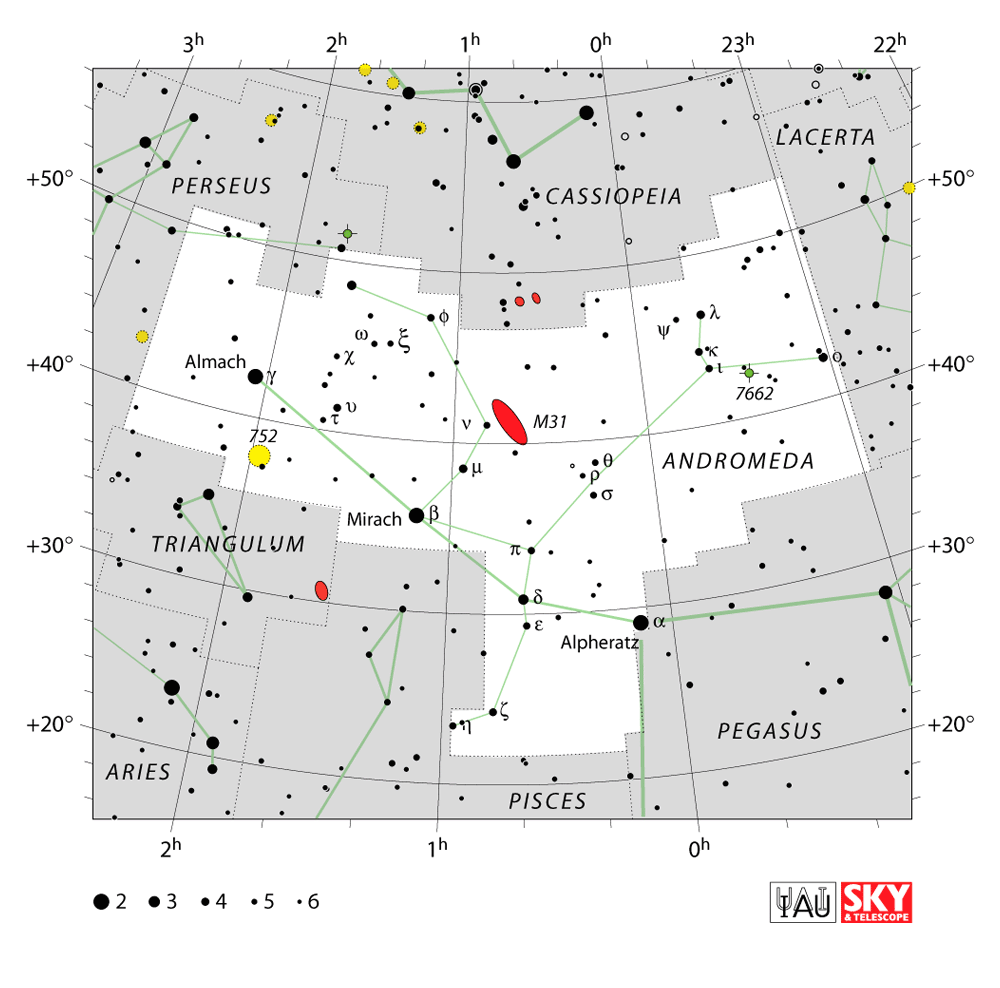
For those of you who want to search out galaxies in the night sky, start with the big one. That’s the Andromeda galaxy (M31), which is in the constellation Andromeda. It is around 2 ½ million light years away and is the other large spiral galaxy in the Milky Way’s Local Group. It is the farthest object we can see with our naked eyes – although, it is a bit of a challenge for me. Make sure to duck in another 4 to 5 billion years as the Andromeda and Milky Way galaxies merge and form the new, probably elliptical galaxy, Milkomeda. Although, some are now saying there is only a 50% chance of the two galaxies colliding.
Andromeda stretches across a width four times that of the Earth’s moon, so it’s hard to see all of it with most telescopes. Binoculars might be a better choice for this one. When you do spot Andromeda make sure to find its two small satellite galaxies (M32 and M110).

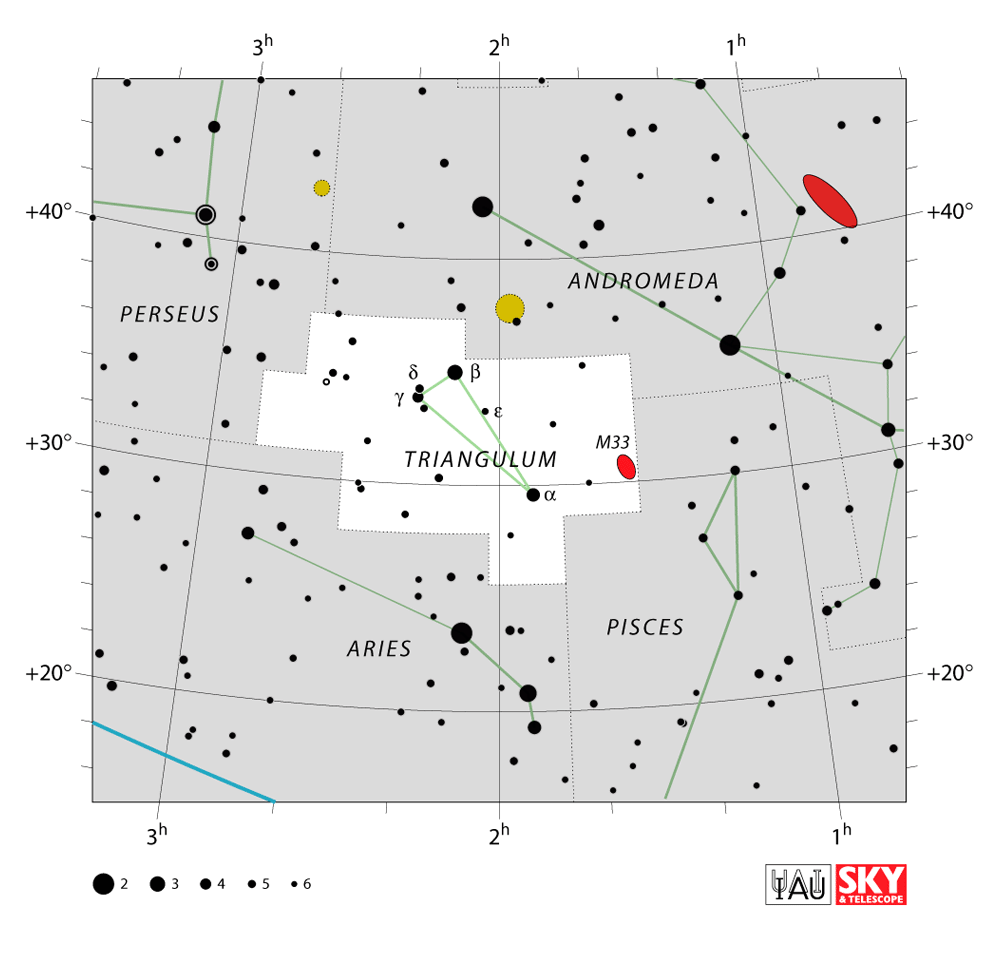
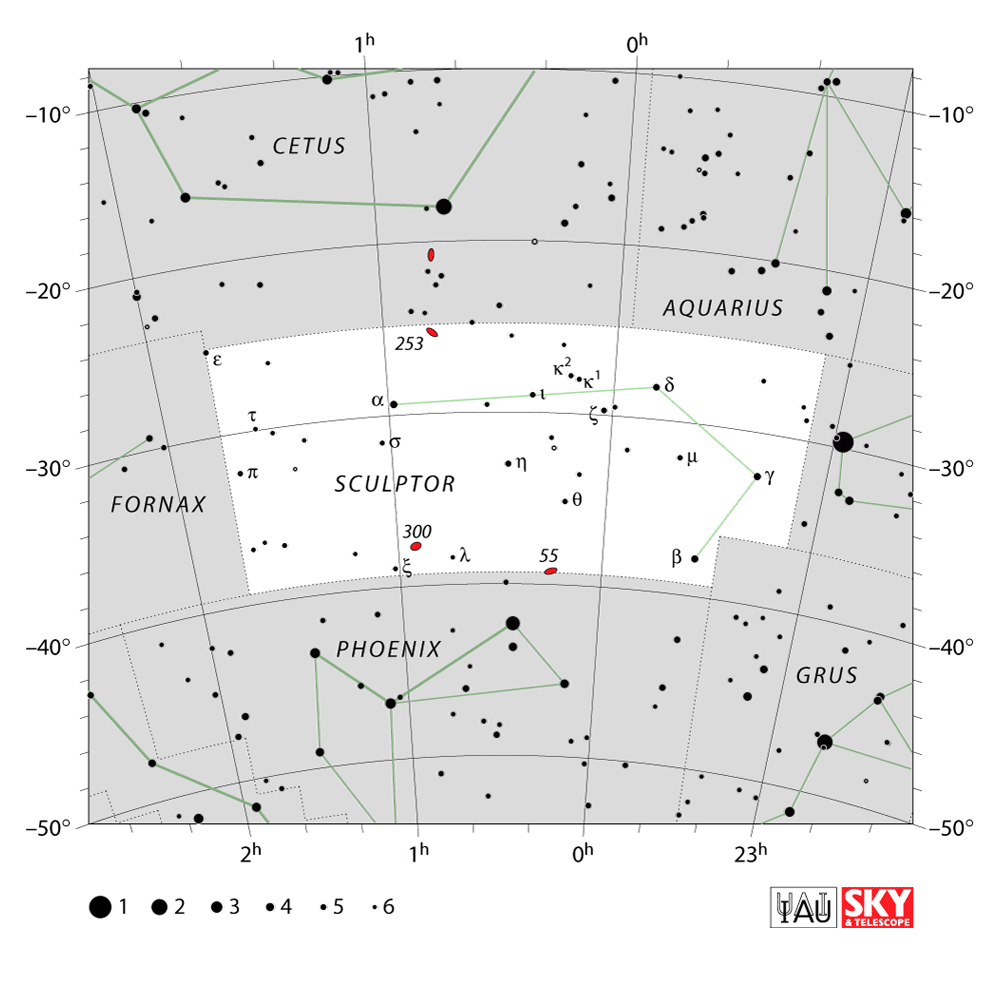
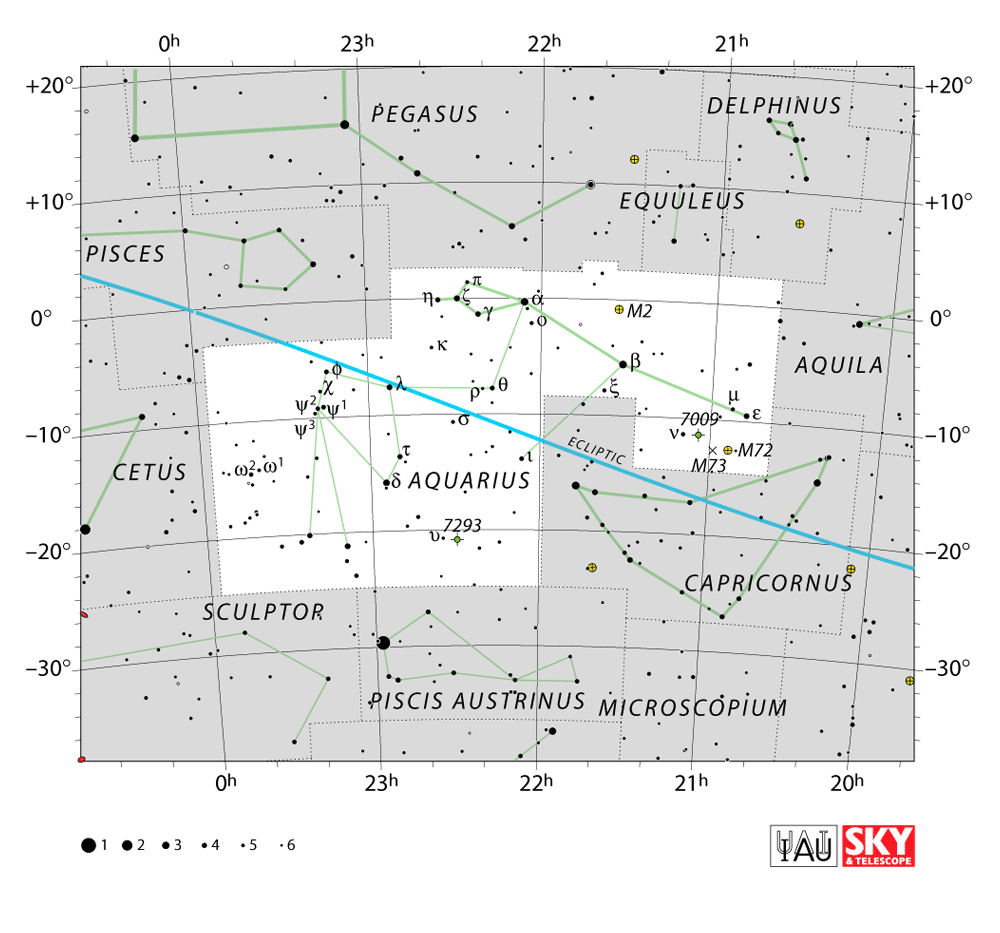
From Andromeda, work your way south down to the constellation of Triangulum for the Triangulum spiral galaxy (M33). This is the next largest galaxy as viewed from the Earth. Another popular target is the Sculptor galaxy (NGC 253 / C65) – the next in line after Andromeda and Triangulum. It is located low in the sky toward the southern horizon in the constellation Sculptor, which is below Cetus (below Pisces) and Aquarius.




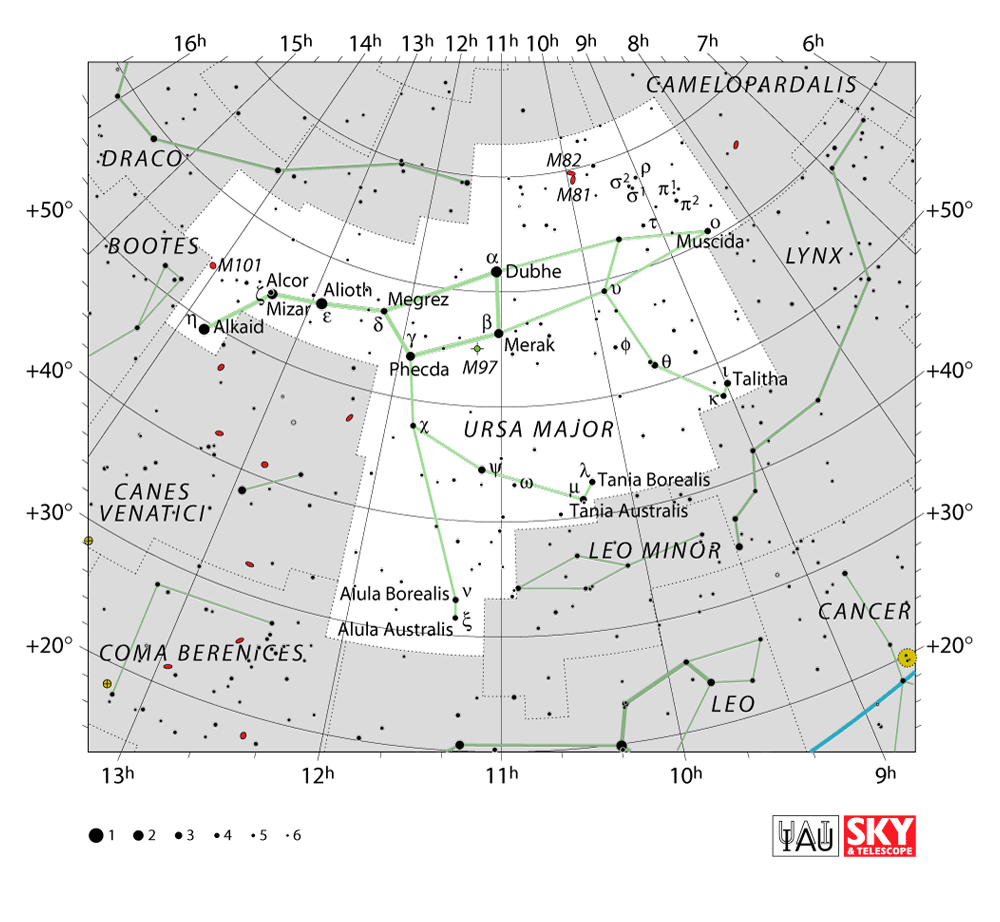
To the north are several favorites. The Whirlpool (M51) and Pinwheel (M101) galaxies can be found off the handle of the Big Dipper in Ursa Major. Bode’s Galaxy (M81) and the Cigar Galaxy (M82) can usually be captured together beyond the bowl of the Dipper.


Whirlpool Galaxy (M51), Bode’s Galaxy (M81) along with the Cigar Galaxy (M82), and the Pinwheel Galaxy (M101)
There are other interesting galaxies in and around Ursa Major and Canes Venatici.
- The Tiger’s Eye galaxy (NGC 2841) is off the nose of the great bear.
- The Surfboard galaxy (M108) is below the bowl near the Owl Cluster (M97).
- The Vacuum Cleaner galaxy (M109) is near Phecda, the lower inner star of the Big Dipper’s bowl.
- A reasonably bright spiral galaxy (M106) is just inside the corner of Canes Venatici toward the Big Dipper’s bowl.
- The Cocoon galaxy (NGC 4490) is in Canes Venatici between the Big Dipper and Coma Berenices.
- The Sunflower galaxy (M63) is just below M51 in Canes Venatici.
- The Croc’s Eye galaxy (M94) is found in Canes Venatici between the Cocoon and Sunflower galaxies.
- The Whale galaxy (NGC 4631) is on the border of Canes Venatici just across from Coma Berenices. The Hockey Stick galaxy (NGC 4657) is found in the same area of the sky.


NGC 2841, M108, M109, M106, NGC 4490, M63, M94, and NGC 4631 & NGC 4657
There are a number of face-on, yet challenging galaxies, that are quite faint and difficult to spot particularly from light polluted skies. Despite their faint appearance, they, along with the Whirlpool (M51), Bode’s (M81), and Pinwheel (M101) galaxies, are excellent examples of spiral galaxies.
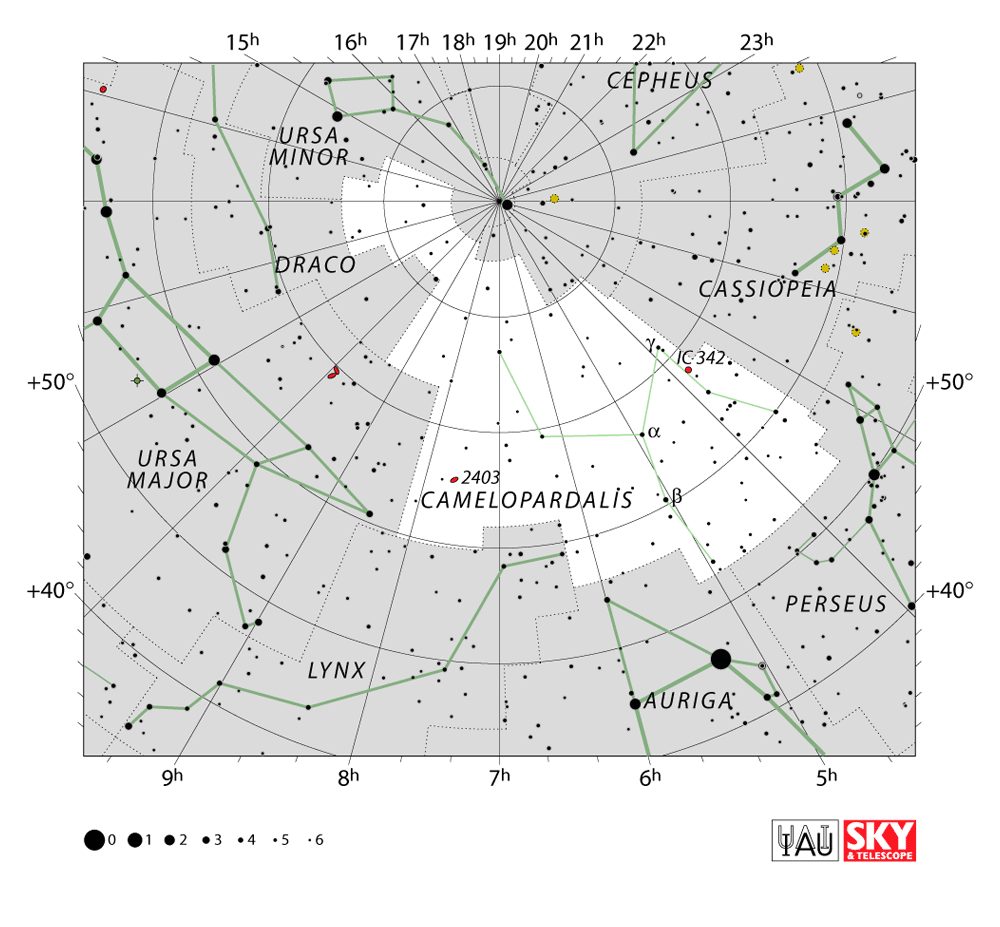
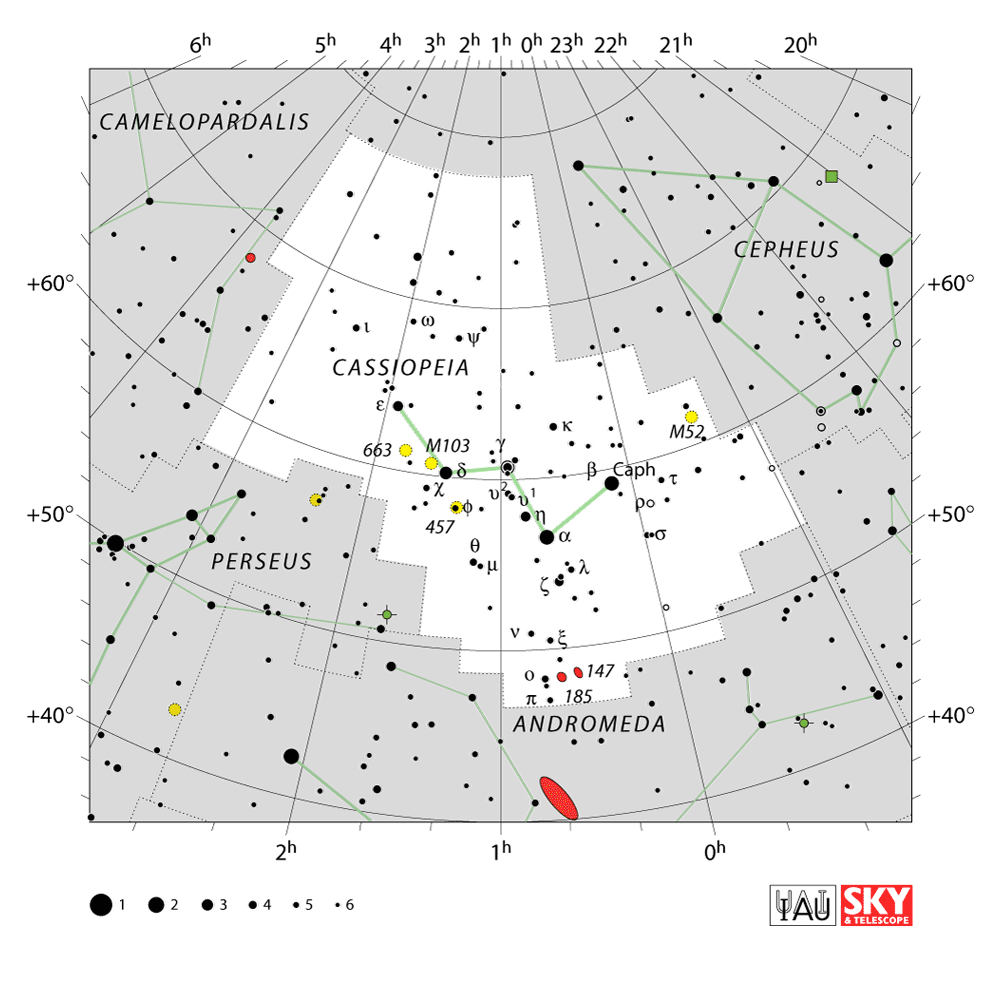
- The Hidden galaxy (IC 342) in Camelopardalis forms a triangle with the end of Cassiopeia and the head of Perseus.
- The Phantom galaxy (M74) is in Pisces near one end of Aries.
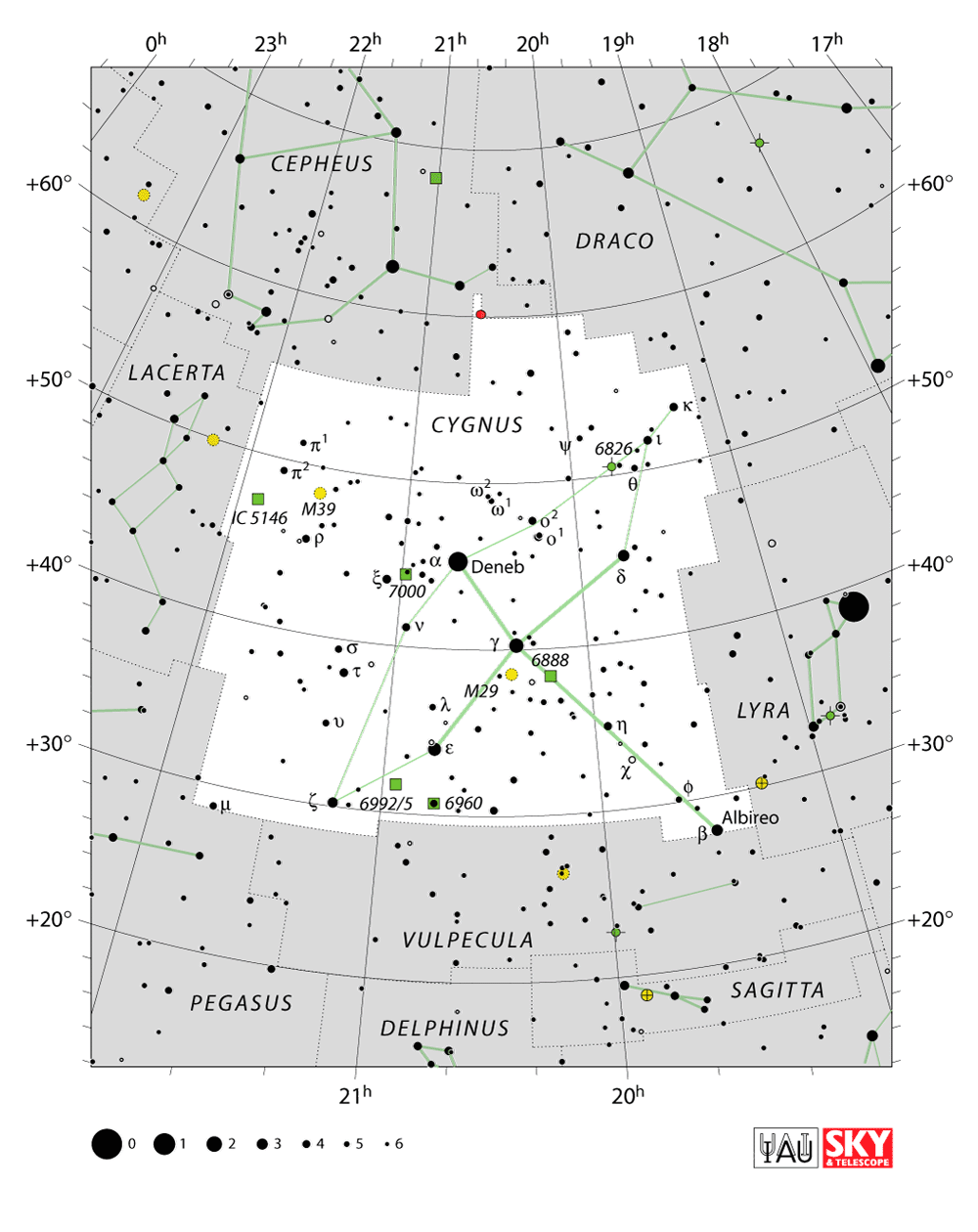
- The Fireworks galaxy (NGC 6946) is between Cygnus and Cepheus.
- The Mirror galaxy (M100) is in the bottom part of Coma Berenices. Note the smaller NGC 4312 in the same frame.
- Close by M100 is the Coma Pinwheel (M99), another spiral galaxy, although with a smaller angular area.
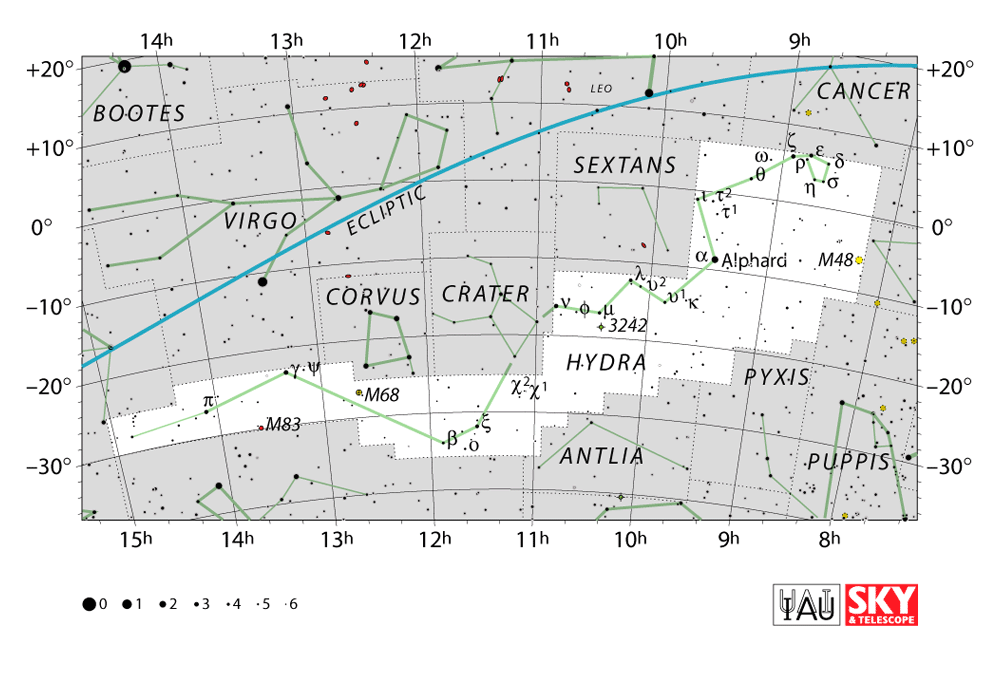
- The Southern Pinwheel Galaxy (M83) is found below the star Spica (Virgo) in Hydra.
- The Propeller / Superman galaxy (NGC 7479) is in Pegasus, although it has a more unusual shape than a traditional spiral.



IC 342 (Hidden), M74 (Phantom), NGC 6946 (Fireworks), M100 (Mirror), M99 (Coma Pinwheel), M83 (Southern Pinwheel), and NGC 7479 (Propeller).
Image Credits: Bill Rankin (M83) and Bruce Gavett.
Scattered throughout the night sky are several edge-on spiral galaxies that appear somewhat similar.
- Look for the Silver Silver galaxy (NGC 891 / C23) in Andromeda.
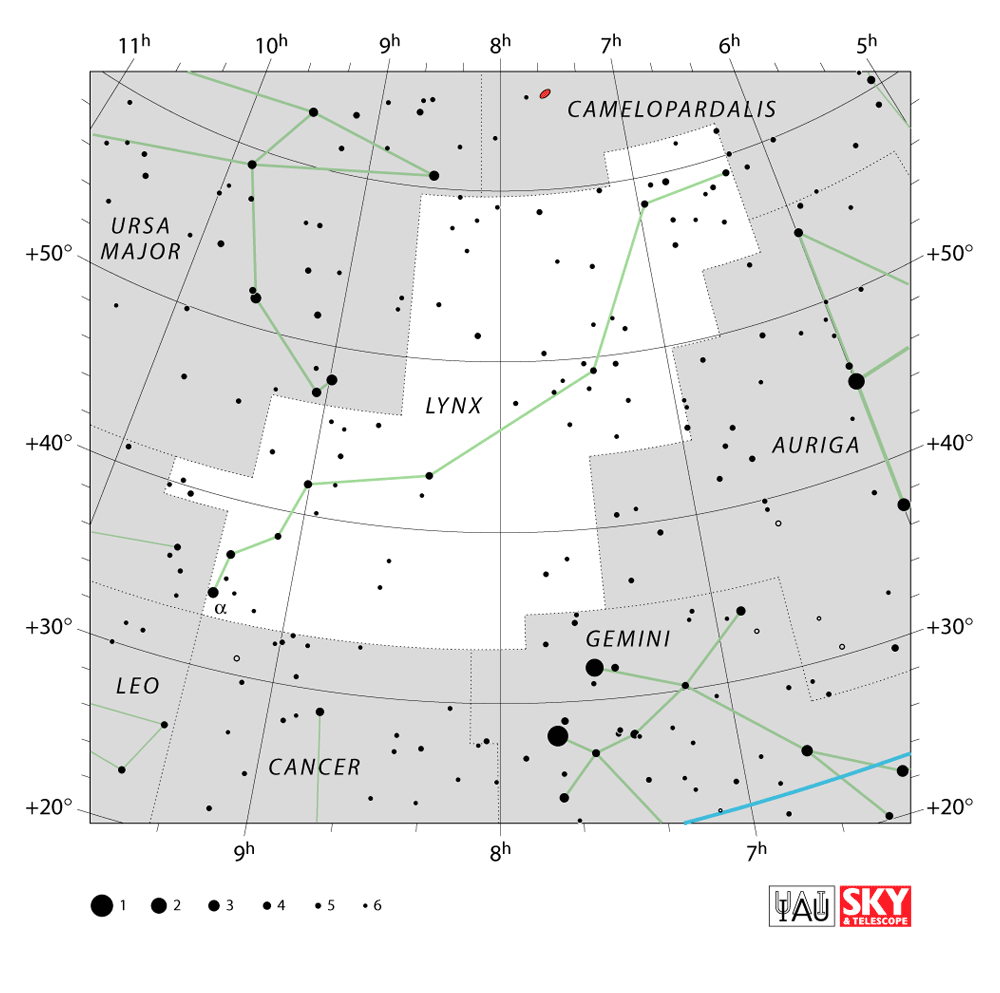
- Sandwiched between Lynx and Cancer, off the front legs of Ursa Major, is the UFO galaxy (NGC 2683).
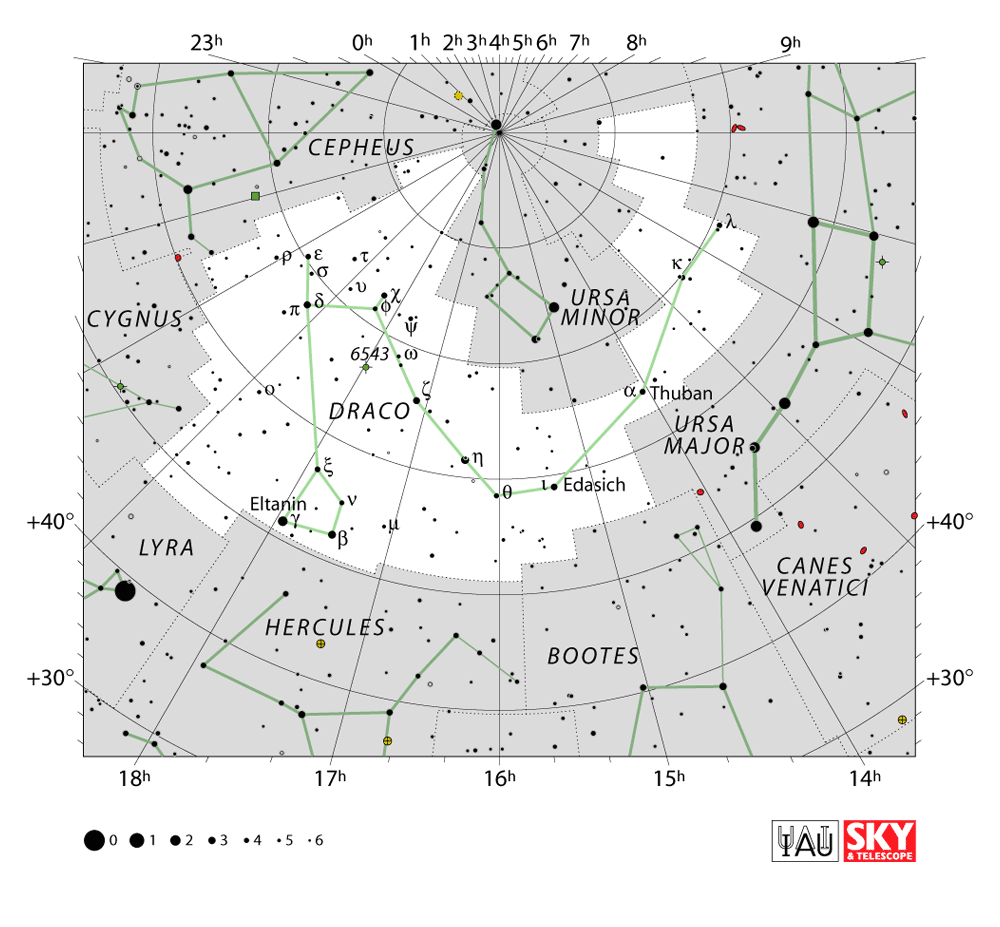
- In the constellation Draco, and near M101, are the Splinter (NGC 5907) and Spindle (M102) galaxies.
- In Canes Venatici and farther below the Big Dipper’s handle from M51, is the Silver Needle galaxy (NGC 4244 / C26).
- In Coma Berenices and toward Boötes, is the Needle galaxy (NGC 4565 / C38), which is also referred to as Bereneice’s Hair Clip.
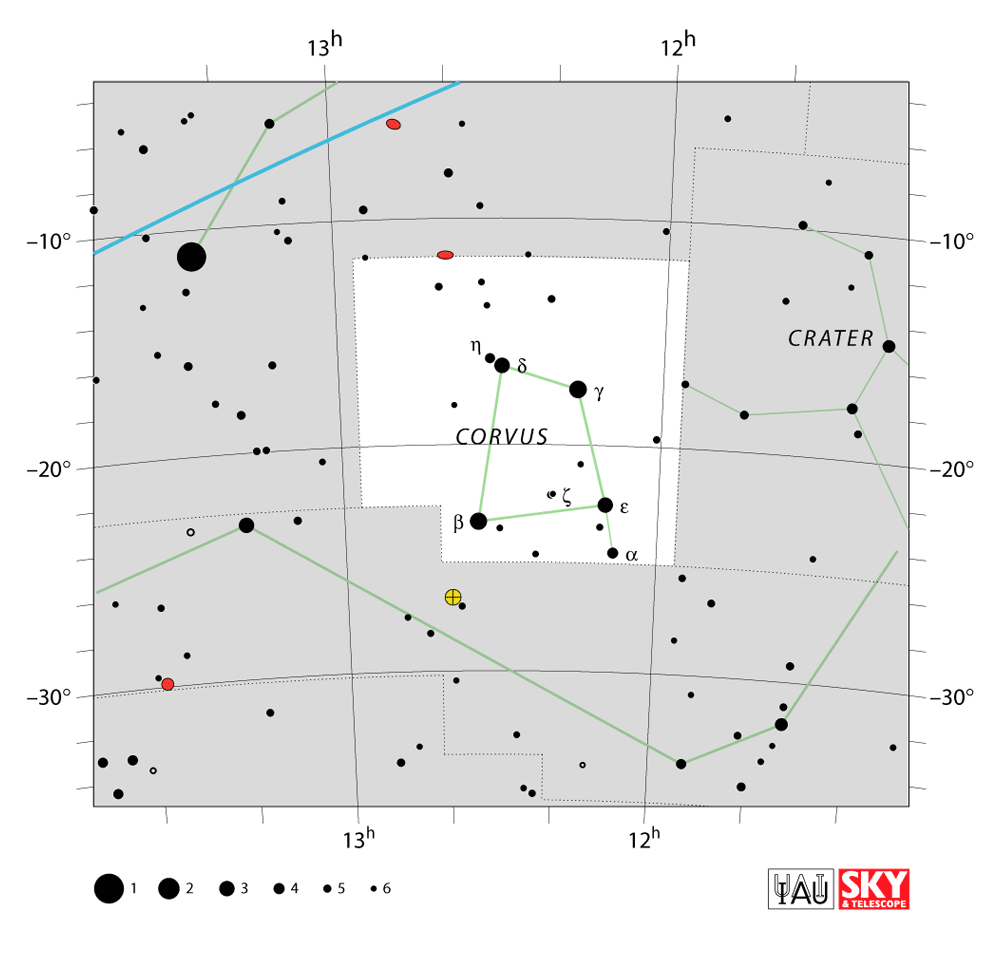
- Finally, find the Sombrero galaxy (M104) in Virgo near Corvus.



NGC 891 (Sliver Silver), NGC 2683 (UFO), NGC 5907 (Splinter), M102 (Spindle), NGC 4244 (Silver Needle), NGC 4565 (Bereneice’s Hair Clip), and M104 (Sombrero)
A few other miscellaneous galaxies can be found throughout the night sky.
- Cetus A (M77) is a spiral galaxy in Cetus just to the west of the bend in Pisces.
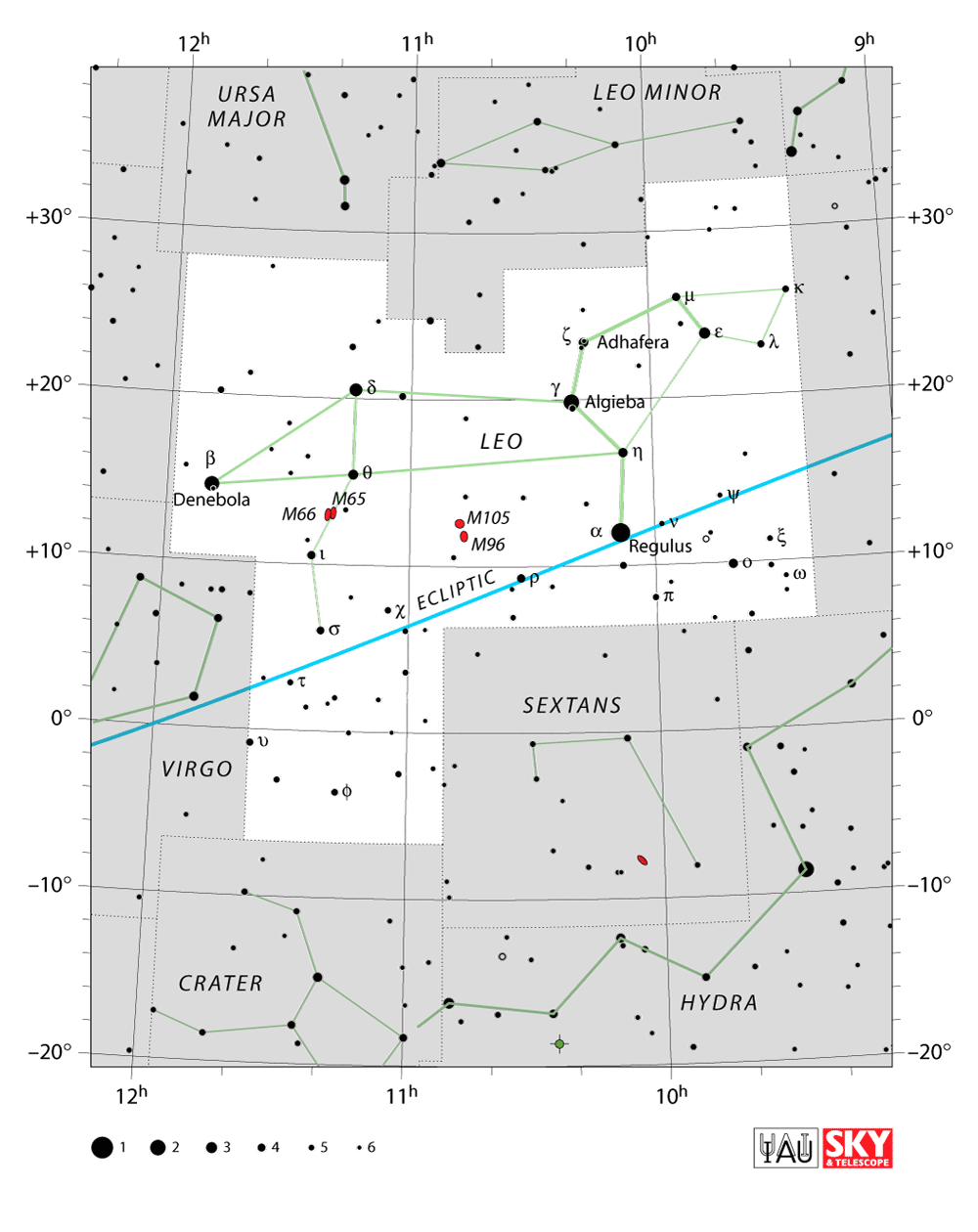
- NGC 2903/5 is a spiral galaxy off the noise of Leo.
- Two Messier Galaxies (M85 and M98) are found in the northern part of Coma Berenices below the tail of Leo.
- The Black Eye Galaxy (M64) is found in the middle of Coma Berenices.


NGC 2903, M85, M98 and M64
There are several galactic groups visible in the night sky. The Leo Triplet of M65, M66, and NGC 3628, found near the hind legs of Leo, is probably the most well-known. M95, M96, M105, and NGC 3371 form a group below the middle of Leo’s body. These are examples of “loose” galactic groups.


Other galactic groups can be found, including those in Paul Hickson’s 1982 catalog of compact groups of galaxies (HCG).
- The most well-known (HCG 92) is Stephan’s Quintet of NGC 7317, NGC 7318, NGC 7319, and NGC 7320 near the front legs of Pegasus.
- Nearby Stephan’s Quintet is NGC 7331 and the Deer Lick Group of galaxies (NGC 7335, NGC 7336, NGC 7337, and NGC 7340).
- Another (HCG 40) is found in Hydra.
- The Leo Quartet group (HCG 44) includes NGC 3185, NGC 3187, NGC 3190, and NGC 3193 at the neck of Leo.
- The bowl of Ursa Minor points toward the Draco Triplet (NGC 5981, NGC 5982, and NGC 5985) in Draco.
- You can also look for the two colliding antennae galaxies (NGC 4038 and NGC 4039) in Corvus.


NGC 7331 (Deer Lick Group), NGC 7331, NGC 3190 (Leo Quartet), NGC 5981, NGC 5982, & NGC 5985 (Draco Triplet), NGC 4038 & NGC 4039 (Antennae Galaxies)
The best-known group of galaxies is Markarian’s chain located between Virgo and Coma Berenices. With Polaris at the top, it starts in Virgo with two elliptical or lenticular galaxies, M84 and M86, and moves to the left. Next are “the eyes” of NGC 4435 and NGC 4438. The chain bends up with NGC 4461 and NGC 4458. It continues into Como Berenices with NGC 4473 and NGC 4477.


Many other galaxies are found in the neighborhood of Markarian’s chain.
- NGC 4402, NGC 4425, NGC 4413, and NGC 4388 surround the start of the chain in Virgo.
- M88, M91, and NGC 4571 are in Como Berenices beyond the chain’s end.
- M87, M89, M90, and NGC 4531 are off to the left in Virgo.
- M58, and M59 & M60 form a line below the chain in Virgo. Below M58 are NGC 4567 and NGC 4568, which look like the antenna galaxies, but are not.


M88, M91, M87, M90 & M89, M58, and M59 & M60. Image Credits: Bill Rankin (M91) and Bruce Gavett
For a checklist of galaxies to find during the spring, see our Spring Night Sky page.
Many of the images above were taken with a ZWO Seestar S50, ASI585, or ASI2600 camera. They were processed using Siril (C. Richard et al., Journal of Open Source Software, 2024, 9(102), 7242. DOI: 10.21105/joss.07242), GraXpert, Seti Astro Cosmic Clarity sharpening and denoise, and VeraLux Hypermetric Stretch. See our Introduction to Astrophotography for more information.
Selected Sources and Further Reading (Galaxies)
- “What is a Galaxy?” NASA Space Place. Updated July 13, 2022.
- “Galaxies.” NASA Imagine the Universe. Updated February 2016.
- “Galaxy Basics.” NASA.
- “Galaxy Types.” NASA.
- Andy Briggs and Editors of EarthSky. “What’s a galaxy? All you need to know.” EarthSky. May 21, 2024.
- “Galaxies.” Astronomy.
- “Galaxies.” Hubble Site.
- Christopher Crockett. “What are elliptical galaxies?” EarthSky. December 5, 2012.
- Robert Lea. “The Milky Way may not collide with neighboring galaxy Andromeda after all: ‘From near-certainty to a coin flip‘.” Space.com. June 2, 2025.
- Elizabeth Howell and Ailsa Harvey. How many galaxies are there?” space.com. February 1, 2022.
- Craig Freudenrich, Ph.D. “Just How Many Galaxies Are in the Universe?” How Stuff Works. Updated: November 8, 2023.
- Beth Ridgeway. “Webb Proves Galaxies Transformed the Early Universe.” NASA. June 15, 2023.
- “The Hubble tuning fork – classification of galaxies.” ESA.
- “The Hubble Tuning Fork.” Sloan Digital Sky Survey / SkyServer.
- “Hubble Classification.” Cosmos. Centre for Astrophysics and Supercomputing. Swinburne University Astronomy Online.
- “Galaxy morphology and classification.” UBC Physics & Astronomy. Astro 505. Galactic Astronomy. 2016.
- Wikipedia contributors. “Hubble sequence.” Wikipedia, The Free Encyclopedia. Wikipedia, The Free Encyclopedia, 23 Aug. 2024. Web. 30 Sep. 2024.
- “Large Scale Structures.” NASA.
- “The Local Group is our galactic neighborhood.” EarthSky. October 24, 2023.
- Ethan Siegel. “What the Universe looks like: from nearby to far away.” Big Think, Starts with a Bang. January 26, 2026.
- Elizabeth Howell and Ailsa Harvey. How many galaxies are there?” space.com. February 1, 2022.
- Craig Freudenrich, Ph.D. “Just How Many Galaxies Are in the Universe?” How Stuff Works. Updated: November 8, 2023.
- Beth Ridgeway. “Webb Proves Galaxies Transformed the Early Universe.” NASA. June 15, 2023.
- “Hubble’s Deep Fields.” NASA.
- Vera Rubin (An Astronomer and The Observatory). FAS Astronomers Blog. June 2025.
- “Dark Matter.” FAS Astronomers Blog. July 2020.
- “The Dark Universe.” FAS Astronomers Blog. April 2023.
- C. Richard et al., Journal of Open Source Software, 2024, 9(102), 7242. DOI: 10.21105/joss.07242
Selected Sources and Further Viewing (Galaxies)
- Phil Plait. “Galaxies, part 1.” Crash Course in Astronomy #38/YouTube. October 29, 2015.
- Phil Plait. “Galaxies, part 2.” Crash Course in Astronomy #39/YouTube. November 5, 2015.
- “All You Need to Know about Galaxies.” EarthSky/YouTube. May 19, 2024
Technical Reading (Galaxies)
- E. P. Hubble (1926). “Extra-galactic nebulae”. Contributions from the Mount Wilson Observatory / Carnegie Institution of Washington. Volume 324. Pages 1-49. 1926CMWCI.324….1H.
- G. De Vaucouleurs (1959). “Classification and Morphology of External Galaxies“. Astrophysik IV: Sternsysteme / Astrophysics IV: Stellar Systems. Handbuch der Physik / Encyclopedia of Physics. Volume 53. Pages 275–310. 1959HDP….53..275D. 10.1007/978-3-642-45932-0_7.
Selected Sources and Further Reading (Catalogs and Lists)
- “Messier Objects.” Messier Objects.
- “Caldwell Catalogue.” Constellation Guide.
- “Hubble’s Messier Catalog.” NASA Science.
- “Hubble’s Caldwell Catalog.” NASA.
- “Objects In the Night Sky.” In-The-Sky.org.
- “Deep-Sky Corner.” Deep-Sky Corner.
- “The Hickson’s Compact Groups of Galaxies (HCG) Catalog.” In-The-Sky.org.
- “Stephan’s Quintet.” Constellation Guide. July 29, 2022.
- “Group of Galaxies Hickson 40 (Arp 321).” Deep-Sky Corner.
- “Galaxy Group Hickson 44.” Deep-Sky Corner.
- Michael E. Bakich. “Try observing these stellar elliptical galaxies.” Astronomy Magazine. April 2020 Issue. April 9, 2020.
- “Deep-Sky Objects.” FAS Website.
- “The Spring Night Sky.” FAS Website.
- “The Deep Sky.” FAS Astronomers Blog. June 2022.
Selected Sources and Further Reading (Constellations)
- “The Constellations.” IAU.
- “The 88 Constellations.” The Sky Live.
- Dominic Ford. “List of the Constellations.” In-The-Sky.org.
- “Constellations.” Deep-Sky Corner.
Selected Sources and Further Information (Specific Galaxies)
- “Messier 31: Andromeda Galaxy.” Messier Objects. April 28, 2015.
- “Messier 32: Le Gentil.” Messier Objects. April 28, 2015.
- “Messier 110: Edward Young Star.” Messier Objects. September 26, 2015.
- “Messier 33: Triangulum Galaxy.” Messier Objects. April 28, 2015.
- “Sculptor Galaxy (NGC 253).” Constellation Guide. January 3, 2023.
- “Messier 81: Bode’s Galaxy.” Messier Objects. August 8, 2015.
- “Messier 82: Cigar Galaxy.” Messier Objects. August 8, 2015.
- “Messier 101: Pinwheel Galaxy.” Messier Objects. August 28, 2015.
- “Messier 51: Whirlpool Galaxy.” Messier Objects. June 3, 2015.
Face-on spiral galaxies.
- “Hidden Galaxy (IC 342).” Constellation Guide. February 17, 2025.
- “Messier 74: Phantom Galaxy.” Messier Objects. July 24, 2015.
- “Fireworks Galaxy (NGC 6946).” Constellation Guide. December 13, 2021.
- “Messier 100.” Messier Objects. August 18, 2015.
- “Messier 99: Coma Pinwheel.” Messier Objects. August 28, 2015.
- “Messier 83: Southern Pinwheel Galaxy.” Messier Objects. August 8, 2015.
- “Superman Galaxy (NGC 7479).” Constellation Guide. October 17, 2024.
Edge-on galaxies.
- “Silver Sliver Galaxy (NGC 891).” Constellation Guide. October 7, 2024.
- “UFO Galaxy (NGC 2683).” Constellation Guide. March 27, 2025.
- “Messier 102: Spindle Galaxy.” Messier Objects. September 8, 2015.
- “Splinter Galaxy (NGC 5907).” Constellation Guide. June 30, 2025.
- “Silver Needle Galaxy (NGC 4244).” Deep-Sky Corner.
- “Needle Galaxy.” Berenices’ Hair Clip (NGC 4565). Constellation Guide. May 7, 2023.
- “Messier 104: Sombrero Galaxy.” Messier Objects. September 10, 2015.
Markarian’s Chain in Virgo and Como Berenices.
- “Markarian’s Chain.” Messier Objects. August 8, 2017.
- “Markarian’s Chain.” Deep-Sky Corner.
- Charlotte Daniels. “Markarian’s Chain is a beautiful string of spring galaxies. Find out how to see it in the night sky.” BBC Sky at Night Magazine. March 20, 2024.
- Bob King. “Yanking Markarian’s Chain.” Sky & Telescope. April 10, 2019.
- Glenn Chaple. “Explore Markarian’s Chain.” Astronomy Magazine. April 2020 Issue. May 19, 2020. Updated May 18, 2023.
- Mark Armstrong. “Line up Markarian’s Chain.” Astronomy Now. April 8, 2024.
For more articles like this see:
You must be logged in to post a comment.